
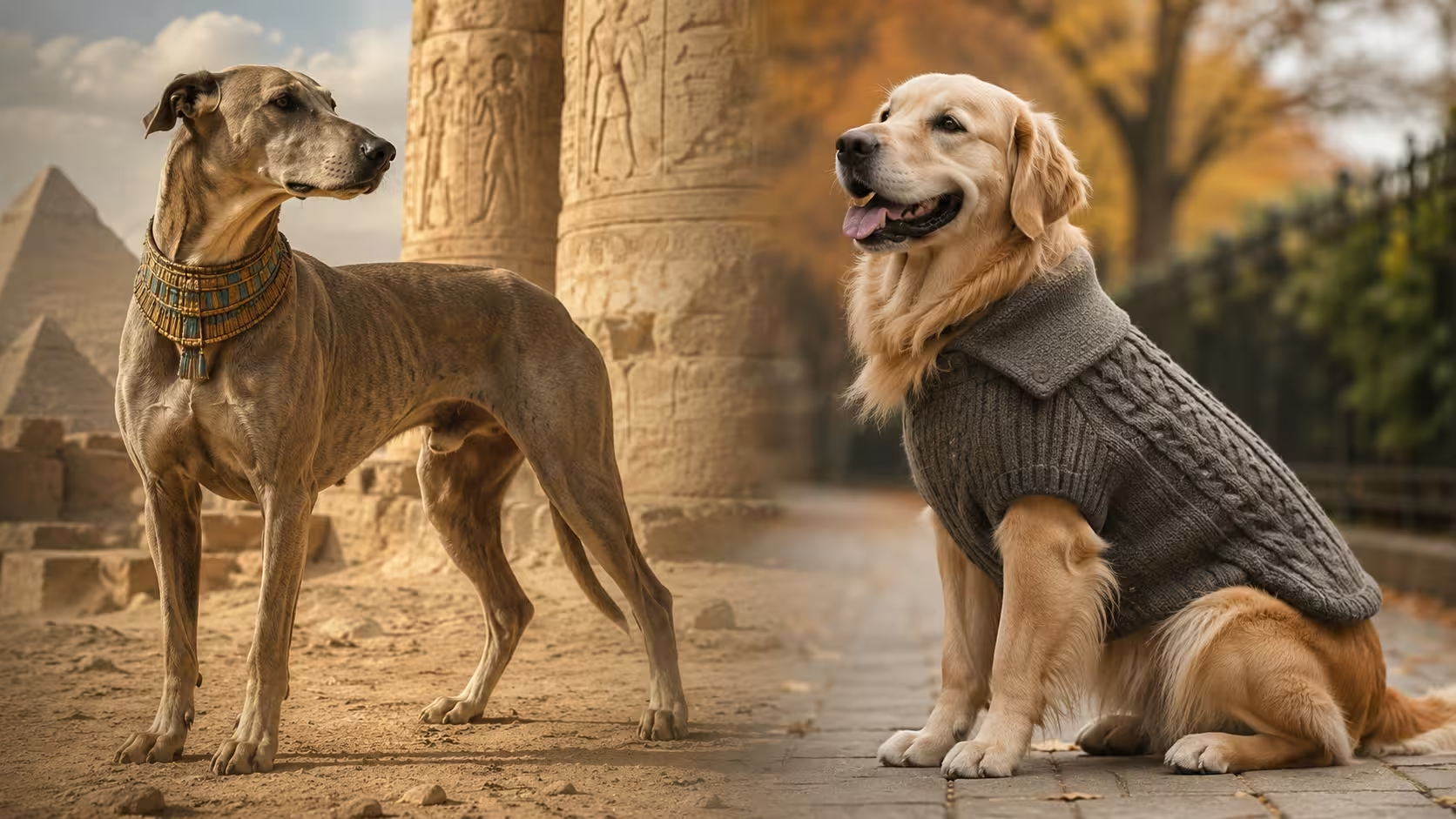
Dogs wearing sweaters, raincoats, boots, and Halloween costumes may look like a modern trend, but humans have been putting collars, protective gear, and decorative accessories on dogs for thousands of years.
Dog clothing did not develop in a straight line from ancient armor to today’s pet fashion. Instead, it grew out of several different needs: identification, protection, warmth, status, and eventually style.
Dogs Have Worn Collars for Thousands of Years
Some of the earliest evidence of dog accessories comes from ancient art and archaeological objects.
A limestone dog from Cyprus dating to around the 4th–3rd century BCE, now held by The Metropolitan Museum of Art, clearly shows a dog wearing a collar. The museum suggests the animal may have represented a faithful guardian.
Ancient Chinese artwork provides another example. An Eastern Han dynasty pottery dog from roughly 25–220 CE wears a studded collar. According to The Met, that fashionable accessory may indicate that the dog belonged to a wealthy owner.
Collars served practical purposes, but they could also communicate ownership, status, or the role of the animal.
What About Ancient Dog Armor?
Stories about dogs charging into Greek or Roman battles wearing armor are popular online, but the history is more complicated.
Dogs certainly accompanied armies as guards, messengers, hunting animals, and companions. However, historical research cited by the American Kennel Club challenges the idea that armored attack dogs routinely fought alongside Greek and Roman soldiers.
There are accounts of dogs being used more aggressively by some other groups and periods, but it is safer to say that protective and spiked dog equipment has historical roots rather than claiming that dog armor was common throughout the ancient world.
Dogs Become Fashionable Companions
The relationship between people and dogs changed dramatically over time.
By the 19th century, especially in Victorian Britain, keeping dogs purely as household companions became increasingly common. Organized breeding and dog shows also expanded during this period, helping turn certain breeds into symbols of taste and social status.
With that change came more elaborate dog accessories.
Decorative collars, ribbons, coats, and other items increasingly appeared alongside fashionable companion dogs. Historical accounts from the late 1800s even describe specialized shops selling dog clothing for different occasions.
Pet fashion, in other words, is not quite as new as it may seem.
From Decoration to Practical Dog Clothing
Today, dog clothing serves many different purposes.
Common examples include:
- Sweaters
- Winter coats
- Rain jackets
- Cooling garments
- Dog boots
- Recovery suits
- Life jackets
- Bandanas and bow ties
- Halloween costumes
Some items exist mostly for appearance, while others can be genuinely useful.
A short-haired or small dog may benefit from extra insulation in cold weather, while boots can help protect paws in certain weather or terrain conditions.
Our guide to dressing your dog for winter covers coats, sweaters, boots, and paw protection in more detail.
Why Do People Dress Dogs Today?
Weather Protection
Cold, rain, snow, and hot surfaces are some of the most practical reasons for dog clothing.
Not every dog needs a winter coat. Breed, size, natural coat, age, health, activity level, and weather all matter.
Holidays and Special Occasions
Halloween costumes and seasonal outfits have also become a major part of modern pet fashion.
If you want something festive, our Halloween dog costume guide includes costume ideas along with fit and safety considerations.
Visibility and Safety
Reflective jackets, brightly colored gear, and some types of boots can serve a practical purpose during walks or outdoor activities.
Style
Sometimes there is no practical reason at all.
Owners may simply enjoy a bandana, bow tie, sweater, or coordinated outfit. As long as the dog is comfortable, there is nothing wrong with clothing being just for fun.
Comfort Matters More Than Fashion
Whatever the reason for the outfit, the dog’s comfort should always come first.
Before purchasing clothing, take accurate measurements. Our guide to measuring your dog for clothes explains how to measure the neck, chest, and back.
Dog clothing should:
- Allow normal walking, sitting, and lying down
- Avoid restricting breathing or movement
- Fit securely without being tight
- Stay away from the eyes and mouth
- Avoid loose pieces that can be chewed or swallowed
- Be removed if the dog becomes uncomfortable
- Be supervised when appropriate
Dogs that are unfamiliar with clothing may need time to adjust.
Rather than putting on a complete outfit immediately, start with short sessions and positive reinforcement. The American Kennel Club similarly recommends introducing clothing gradually and keeping early experiences short and positive.
Our guide to training your dog to wear clothes explains the process step by step.
Final Thoughts
Dog fashion has changed considerably over the centuries.
Ancient dogs wore collars for practical and decorative reasons. By the 19th century, dogs were becoming increasingly prominent household companions, and specialized accessories and clothing became more common.
Today, dog clothing ranges from functional winter coats and protective boots to bow ties and Halloween costumes.
The designs may have changed, but one principle should guide modern dog clothing: the dog’s comfort should always matter more than the outfit.
For more practical advice on clothing, grooming, safety, and everyday care, browse our Dog Guides.