
Some dogs seem completely comfortable in a sweater or jacket, while others become confused the moment something touches their body. If your dog has never worn clothing before, the best approach is to introduce it gradually rather than putting on an outfit and expecting them to immediately accept it.
Whether you are preparing your dog for a winter coat, rain jacket, protective clothing, or an occasional costume, short positive sessions can help them become more comfortable with the experience.
The goal is not to make your dog wear clothes all the time. It is to help them tolerate clothing comfortably when there is a practical or occasional reason to use it.
Start With Clothing That Fits Properly
Before training your dog to wear anything, make sure the garment fits correctly.
Clothing that is too tight can restrict movement or rub around the neck, chest, shoulders, and legs. Something too loose may slide around, twist, or interfere with walking.
For most dog clothing, the three most useful measurements are the neck, chest or girth, and back length.
If you are unsure about sizing, start with our guide on how to measure your dog for clothes before choosing a garment.
For your dog’s first training sessions, choose something lightweight and simple. A basic sweater or shirt is generally easier to introduce than clothing with sleeves, hoods, straps, or decorative pieces.
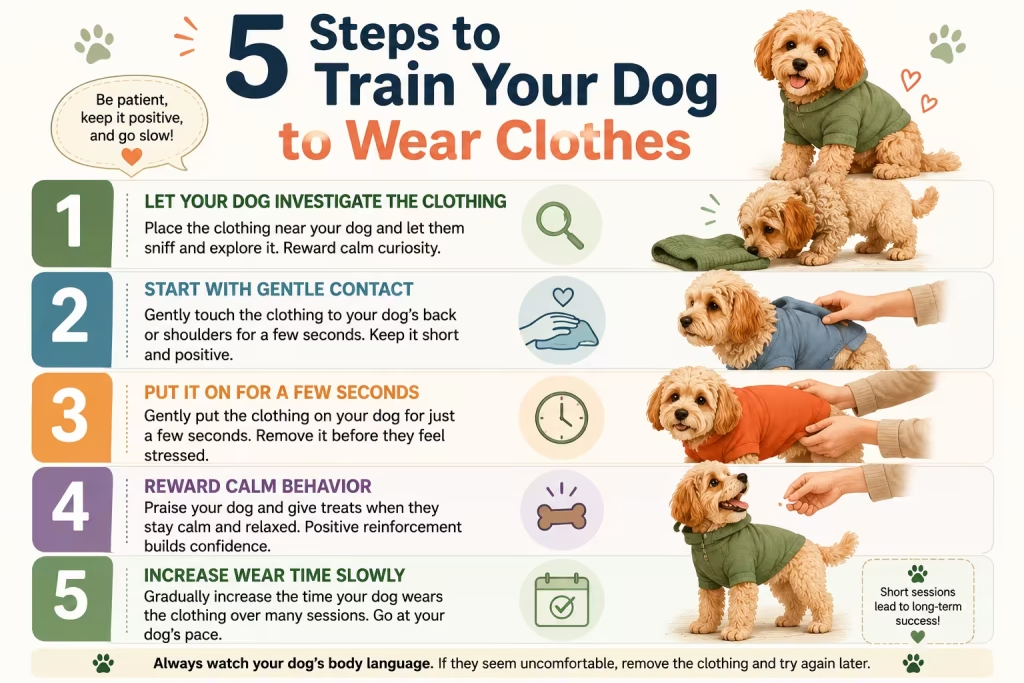
Step 1: Let Your Dog Investigate the Clothing
Before putting the garment on your dog, give them a chance to investigate it.
Place the clothing nearby and let your dog sniff it at their own pace. Avoid pushing it toward their face or immediately trying to dress them.
If your dog approaches the garment calmly, reward them with a treat, praise, or another reward they enjoy.
You can repeat this several times until the clothing becomes an ordinary object rather than something unfamiliar.
Step 2: Start With Gentle Contact
Once your dog is relaxed around the garment, gently touch it to their back or shoulders without putting it on completely.
Keep the first interaction short.
Remove the garment after a few seconds and reward calm behavior. Repeat this over several short sessions.
If your dog moves away, becomes tense, or seems worried, don’t chase or restrain them. Give them a break and try again later.
Step 3: Put It On for a Few Seconds
When your dog is comfortable with the clothing touching their body, try putting it on properly.
For the first session, a few seconds may be enough.
Reward your dog while the garment is on, then remove it before they become frustrated or start trying to pull it off.
Ending the session while your dog is still calm can help create a more positive association with getting dressed.
Step 4: Reward Calm Behavior
Positive reinforcement can make the experience easier for your dog to understand.
While the clothing is on, reward relaxed behavior with something your dog enjoys. This might be a favorite treat, praise, petting, or a short play session.
Try to keep the experience calm and predictable.
Never punish your dog for resisting clothing. If your dog growls, tries to escape, or becomes increasingly stressed, remove the garment and give them some space.
Those behaviors are useful signals that the session has become too difficult or uncomfortable.
Step 5: Increase Wear Time Slowly
Once your dog can comfortably wear the garment for a few seconds, gradually increase the amount of time over several sessions.
You might progress from a few seconds to 30 seconds, then a minute, several minutes, and eventually longer periods if your dog remains relaxed.
There is no fixed timetable.
Some dogs may adjust quickly, while others need many short sessions. Let your dog’s behavior determine how quickly you progress.
Encourage Normal Movement
Once your dog is comfortable wearing the clothing for a short period, encourage them to move around naturally.
Walk a few steps, offer a toy, or place a treat a short distance away. Make sure your dog can walk, sit, turn around, and lie down comfortably.
Pay attention to how the garment moves with your dog.
If it bunches up, twists, pulls across the shoulders, or restricts the legs, the size or design may not be suitable even if the label says it should fit.
Signs Your Dog May Be Uncomfortable
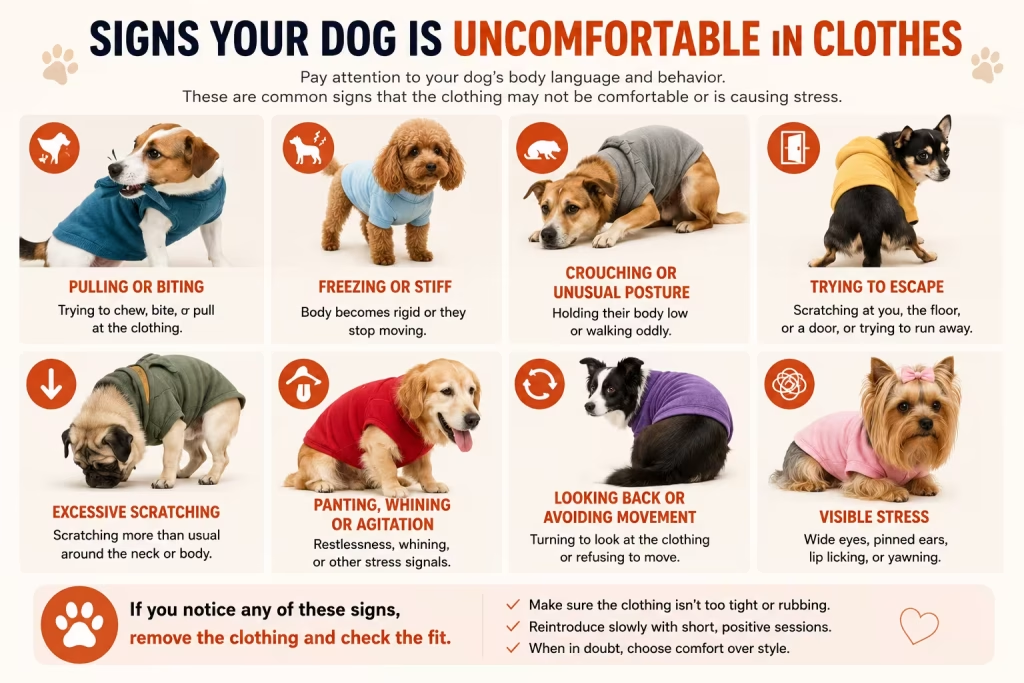
Watch your dog’s behavior whenever they are wearing clothing.
Repeated attempts to bite or pull at the garment, freezing, unusual crouching, difficulty walking, trying to escape, persistent scratching, or obvious agitation can all be signs that something is wrong.
Check the fit first. Look around the neck, chest, leg openings, straps, and seams for anything that may be tight or irritating.
If your dog continues to appear uncomfortable after the garment is removed and reintroduced gradually, that particular piece of clothing may simply not be a good match.
What About Dog Boots or Shoes?
Boots usually require a separate adjustment period because dogs rely heavily on feedback from their paws when walking.
Start by allowing your dog to investigate the boots. Try one or two boots for a very short period indoors before using a complete set.
Encourage a few normal steps on a non-slip surface and reward calm behavior.
Increase the time gradually rather than immediately taking your dog on a long walk in new boots.
The boots should stay secure without rubbing, restricting circulation, or changing your dog’s movement excessively.
Training for Winter Clothing
A dog that may need a coat or sweater during cold weather will benefit from being introduced to it before the first day you actually need it.
Start with short indoor sessions so your dog can become familiar with the garment without also dealing with cold weather, a leash, and an outdoor walk at the same time.
If you’re preparing for colder conditions, see our guide on how to dress your dog for winter for additional tips on choosing appropriate clothing.
Training for Halloween Costumes
Halloween costumes can be more challenging because they often include extra pieces such as sleeves, capes, hats, or straps.
Introduce the costume well before Halloween and start with the simplest portion of the outfit.
If your dog is comfortable wearing only part of a costume, that may be better than insisting on the complete outfit.
Our Halloween Dog Costumes for 2026 guide has additional costume ideas and safety considerations.
Common Mistakes to Avoid
One common mistake is putting a new outfit on a dog and leaving it there until they “get used to it.” Short, successful sessions are usually a better introduction than one long stressful experience.
Avoid starting with complicated clothing, ignoring signs of discomfort, choosing a garment based only on a size label, or assuming that every dog will eventually enjoy dressing up.
Most importantly, don’t use clothing as something your dog must tolerate simply because it looks good. Comfort and freedom of movement should come first.
Frequently Asked Questions
Can dogs be trained to wear clothes?
Many dogs can become more comfortable wearing clothing through gradual introductions and positive reinforcement. How quickly they adjust varies from dog to dog.
Why does my dog freeze when I put clothes on them?
A dog may freeze because the sensation is unfamiliar or because the garment restricts their movement. Check the fit, remove the clothing, and try a shorter introduction later.
How long should training sessions last?
Early sessions can be extremely short—even a few seconds. Increase the duration only when your dog remains comfortable.
Should my dog wear clothes on every walk?
No. Clothing should be used when it serves a practical purpose or when your dog is comfortable wearing it. Not every dog or every weather condition requires clothing.
Final Thoughts
Training your dog to wear clothes works best when you take things slowly.
Let your dog investigate the garment first, introduce gentle contact, put it on briefly, reward calm behavior, and gradually increase the wearing time.
A properly fitted piece of clothing should allow your dog to move naturally and comfortably.
Most importantly, pay attention to what your dog is telling you. The goal isn’t to make every dog love clothing—it is to make any clothing they do wear safe, comfortable, and as stress-free as possible.
For more practical dog-care, clothing, and seasonal advice, explore our Dog Guides.